How to Prevent Mold Growth Around Your Garage Door
Explore our latest guides and tips designed to help you stay informed and make smarter decisions.
Introduction
If there is mold around the garage door then a very offensive odor can start coming out which will also damage the materials of the door and may also pose health risks to you and your family members. Garages are particularly
susceptible to mold because they lack moisture, ventilation, and sunlight. The good news is that, with a few elevated precautionary measures, you can stave off any mold and mildew and have your garage clean and healthy.
In this guide, Affordable Garage Door Repair offers a few helpful
suggestions to help you prevent mold from forming around your garage
door and keep that area safe and free from unwanted spores.
Find out Why Mold Forms Around the Garage Door Area
For it to grow, mold needs moisture, organic material, and poor ventilation. These conditions are often provided by garages, especially if they are attached, or where there is a lot of moisture in the air (which can happen when new concrete is poured). This makes it perfect for mold development.
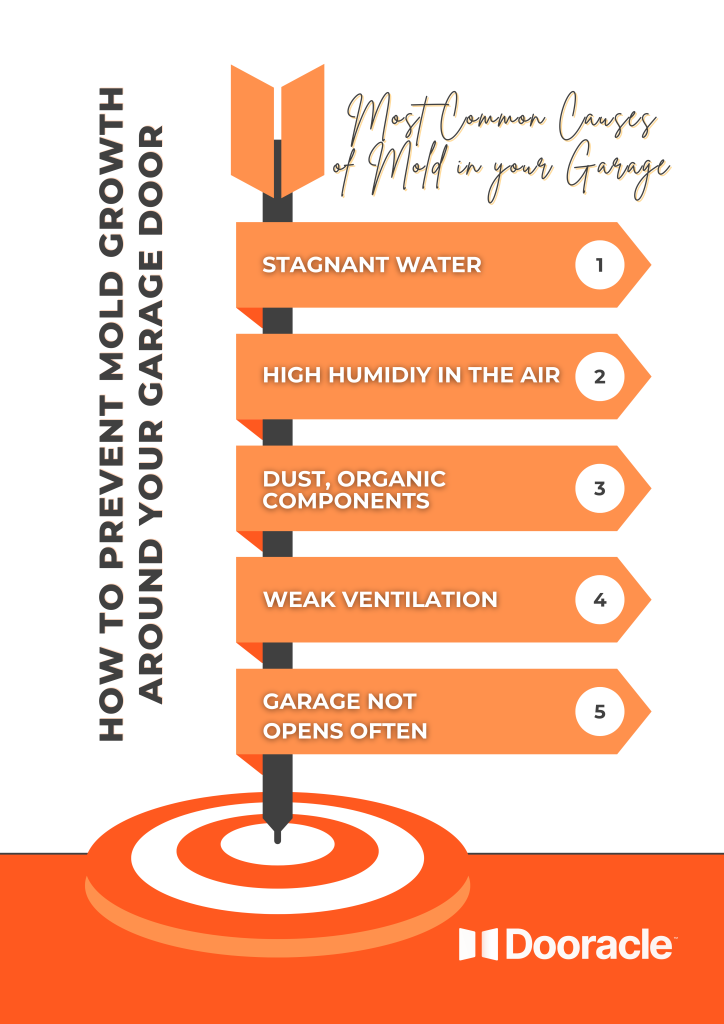
Mold Growth Around Garage Doors: The Most Common Causes
01
Stagnant water due to precipitation, humidity, or dampness.
02
High humid air trapped due to poor ventilation, causing mold clusters on walls and roof.
03
Mold spores feed on organic debris such as dirt, leaves, and dust.
04
Condensation on windows and walls creates damp surfaces conducive to mold.
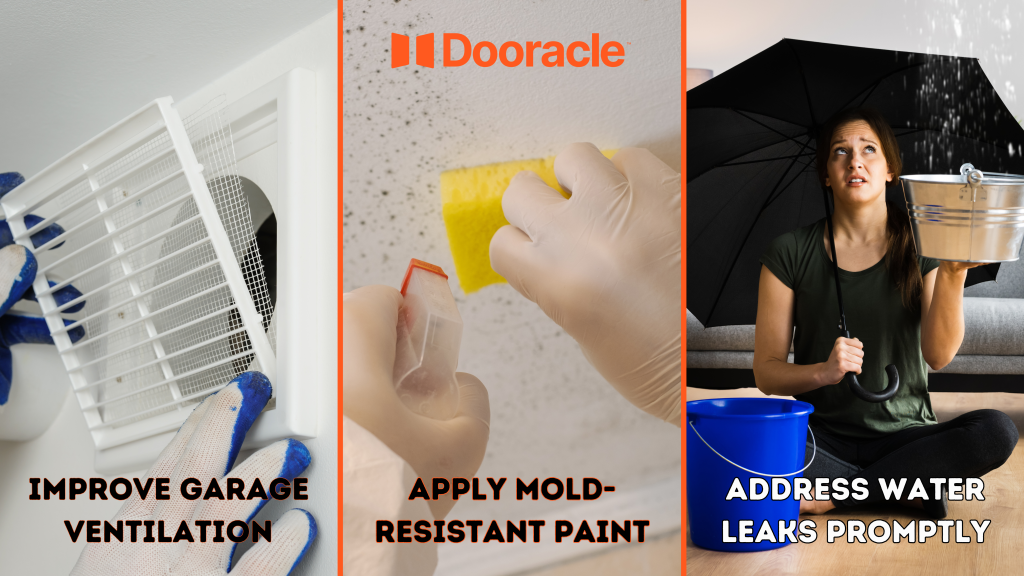
Improve Garage Ventilation
Ventilation can help minimize moisture, which is the source of developing mold. You can keep humidity down and avoid wet surfaces by allowing fresh air movement through your garage.
In a warm and humid climate, install ventilation fans to promote air circulation."
Gain fresh air by opening the garage door.
Consider using a dehumidifier.
Seal and insulate the garage door to prevent moisture.
Solution
Replace any ruined weather stripping on the sides of your garage door.
Ensure garage door insulation to prevent condensation.
Check seals to prevent water or moisture intrusion.
Keep the Space Near the Garage Door Clean and Maintained
01
Sweep and scrub garage floor and walls to remove grime.
02
Apply soft detergent or mold-preventative cleaner on surfaces.
03
Trim plants or bushes near the door to prevent moisture accumulation.
Address Water Leaks Promptly
01
Check for watermarks or moist patches on walls and floor.
02
Fix any leaky roof or plumbing immediately.
03
Seal cracks in walls or foundation to prevent seepage.
Control Humidity Levels
01
Use a hygrometer to monitor humidity.
02
Run a dehumidifier if needed to keep humidity under 60%.
03
Avoid storing wet items in the garage.
Avoid Moisture on Windows and Walls
Temperature changes can generate condensation on garage windows and walls. Keep all surfaces dry to prevent mold growth.
Use insulative film on windows to avoid condensation.
Install rigid foam insulation panels on walls prone to condensation.
Keep surfaces clean and dry.
Apply Mold-Resistant Paint
Use mold-resistant paint or primer on interior garage door surfaces and walls.
Repaint every few years as needed.
Store Items Properly
01
Keep items off the garage floor using shelving or storage racks.
Mold will form on items placed directly on the floor of a garage because it traps moisture underneath. Suspended storage is the key — keep things off the garage floor with shelving or storage racks.
02
Use airtight plastic containers instead of cardboard boxes.
Instead, use airtight plastic containers to store items instead of a cardboard box that can soak up moisture and have mold spores in them.
03
Never store damp items like wet tools, sports equipment, or cleaning supplies.
Never put any damp items in the garage like wet cleaning supplies, tools, or sports equipment.
Check for Mold Growth Periodically
01
Look for dark spots or musty smells on walls, floors, and garage door.
02
Inspect corners, crevices, and garage door lines for moisture buildup.
03
Clean small mold patches with water and white vinegar or a mold cleaner.
When to Call a Professional
or widespread or stubborn mold, professional remediation ensures safe and effective removal. Affordable Garage Door Repair can also inspect seals and insulation to prevent moisture intrusion.
Conclusion
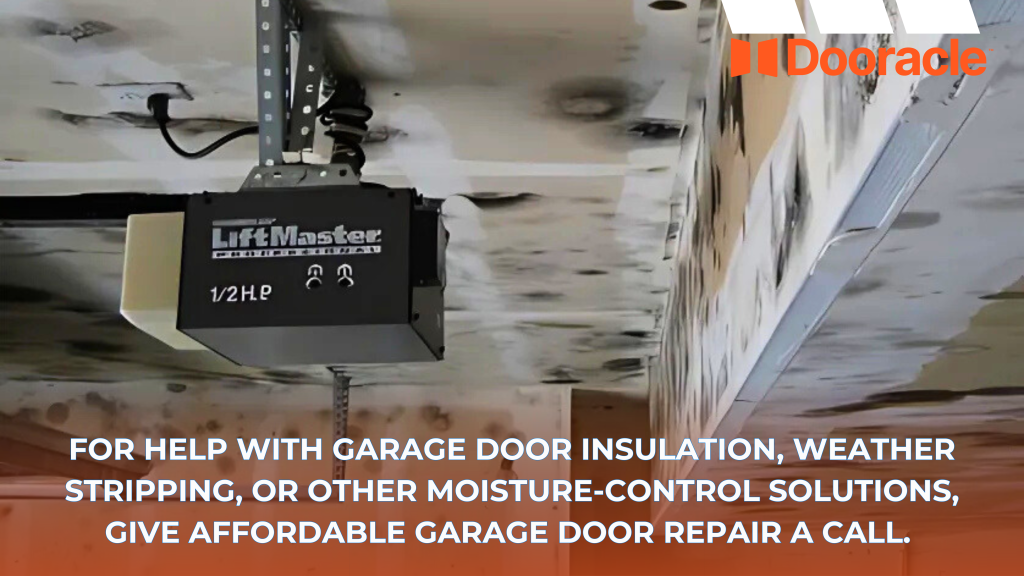
Mold growth around your garage door poses health risks and damages materials. Improving ventilation, controlling moisture, sealing the garage door, and regular cleaning can help prevent mold. For garage door insulation, weather stripping, or moisture control solutions, contact Affordable Garage Door Repair for a custom mold-proof solution.
Contact Us
Should you experience any problems with your garage door while trying to manually operate it, we encourage you to call Uplift Garage. Our friendly and experienced technicians are here to help. Call us today to speak with one of our experienced technicians
The Reason Garage Doors Openers Lose Their Range and How to Fix It
When you are accustomed to opening the door from a distance, then a garage door opener with a limited range is very problematic. After a time, you shall observe that the remote requires you to get nearer and farther in order for it to work, which is very unhandy and ineffectual. To regain the ease of long-range operation, it is important to understand why garage door openers lose range and how to fix the problem.
Is Your Garage Door Prepared for Winter? Cold-Weather Maintenance Tips
With winter quickly approaching, you want to be sure your garage door is ready for the ice and snow. Garage doors experience additional stress through the winter months, and with that pressure comes an effect on their
performance and longevity. It may seem like a no-brainer, but much of what you can do to prepare your garage door for winter is also fall maintenance for a potential spring emergency if not done. It's all about avoiding those surprise frozen parts or sluggish movements that could otherwise leave your garage door virtually useless until you've thawed everything out!
Typical Problems with Garage Door Opener Wall Controls
Garage door opener walls allow you to open and close your garage door from inside the garage without having to use a remote. As with most devices, occasionally a problem may arise that keeps wall controls from working properly. By being aware of the common problems and knowing how to troubleshoot your garage door opener wall control, you can keep your system running well and avoid surprises.