
Why This Happens (And Why It Matters)
Here at Affordable Garage Door Repair, we know all about problems that can occur with a garage door, including when it is just noisy. We intend to eliminate the noise in your life so, with no further ado, here are some of the issues that cause noisy garage doors and ways to fix them.
Rattling Garage Doors are More Common Than You May Think
To remove noise thoughtfully, it must be identified. Some of the reasons garage doors rattle:
01
Underlying Issues Loosening Up
Nuts, bolts, brackets become loose → vibrations.
02
Worn-out Rollers
Rollers guide the door; metal/wear creates noise.
03
Dirty Parts
Hinges, springs, tracks create friction noise if dirty/dry.
04
Track Misalignment
Bent/misaligned tracks cause rubbing and rattling.
05
Old Chain-driven Garage Door Opener
Chain-driven openers are louder.
06
Uneven Door
Door imbalance stresses parts and makes it loud.
Ways To Mitigate a Rattling Garage Door
So, I thought it was only fitting that we provide you with some practical solutions to help silence your noisy garage door.
01
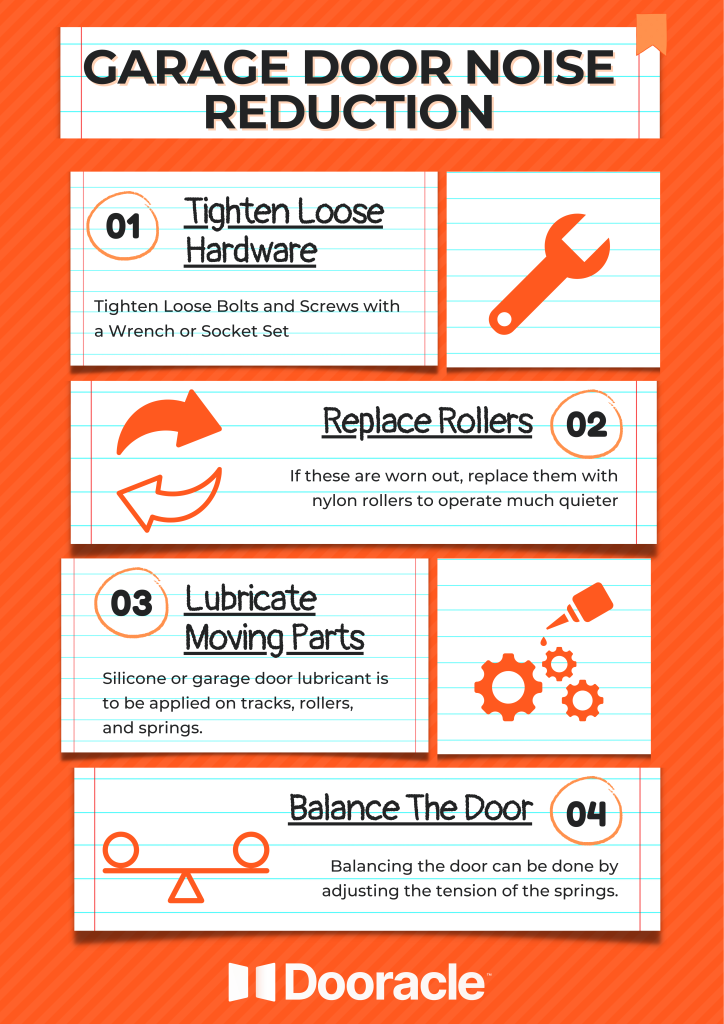
Tighten Loose Hardware
Loose nuts, bolts, and brackets are one of the most common causes of garage door rattling. Inspect the door, tracks, and opener hardware and tighten anything that has loosened over time.
- Tighten bolts and screws using a wrench or socket set
- Check track brackets and door panel hinges
- Avoid overtightening to prevent damage
02
Replacing Rollers
Old or worn rollers—especially metal ones—can make the garage door extremely loud. If your rollers have flat spots or corrosion, replacing them (or upgrading to nylon rollers) can significantly reduce noise.
- Inspect rollers for wear, rust, or flat spots
- Upgrade to nylon rollers for quieter movement
- Roller replacement is best handled by a professional
03
Lubricate Moving Parts
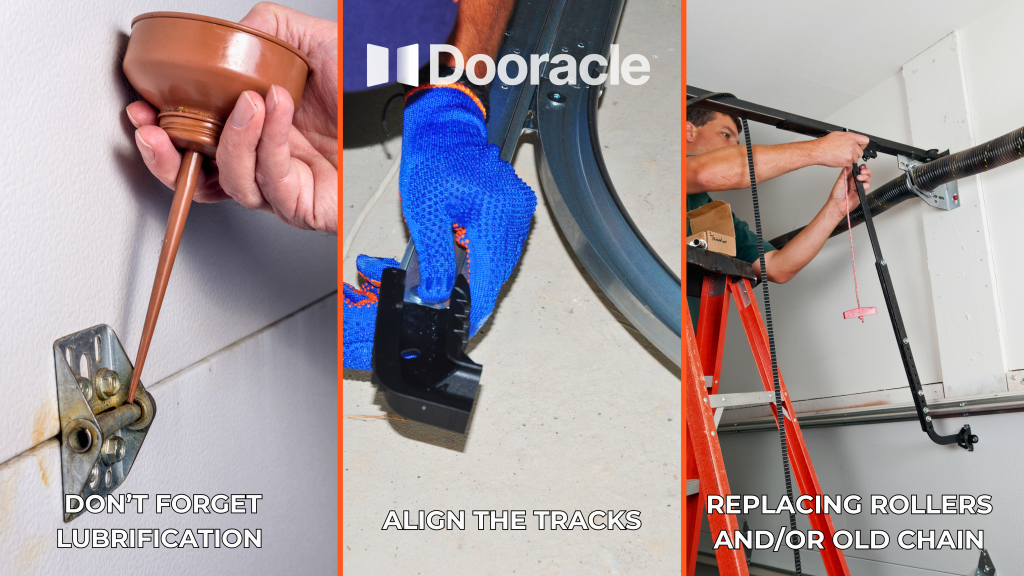
Lack of lubrication causes friction, which leads to squeaks, rattling, and grinding sounds. Lubricating key moving parts helps the garage door operate smoothly and quietly.
- Apply silicone or garage door lubricant
- Lubricate rollers, hinges, and springs
- Avoid grease or WD-40 (can attract dust and dirt)
04
Upgrade to a Quieter Garage Door Opener
Misaligned or bent tracks can make the door rub and rattle during movement.
- Check track alignment with a level
- Adjust brackets if needed
- Clean debris from tracks
- Badly bent tracks → call a professional
05
Balance the Door
An unbalanced door adds stress on the opener and creates extra noise.
- Disconnect opener and lift door halfway
- If it won’t stay → balance issue
- Spring adjustments are risky → hire a professional
06
Upgrade to a Quieter Garage Door Opener
Chain-driven openers are loud. Belt or direct-drive options run much quieter.
- Belt-drive = less vibration
- Direct-drive = quietest option
- Choose soft start/stop for smoother operation
More Tips for Noise Reduction
- Apply Rubber Insulation Strips
- Utilize Vibration Isolators
- Insulate your garage door
When to Call a Professional
So, in case you have already tested with some of these options and your garage door nonetheless will make noise then the fine way is to contact a pro technician. Specific problems like spring adjustments or track realignment demand the expertise of someone who knows what they're doing.
Same-Day Garage Door Noise Solutions
The professional garage door repair technicians at Affordable Garage Door Repair can provide same-day solutions to your noisy garage doors. Don't hesitate to reach out about roller replacements, opener updates, or even a complete system check.
Conclusion
A noisy, rattling garage door isn't just annoying; it can also be a symptom of underlying issues that require attention. Reducing noise and improving the function of your garage door can be achieved by ensuring hardware is tight, lubricating parts, or upgrading components. Nothing helps with the value of your home more than regular maintenance — doing this will also keep you from running into any noise issues down the road, and keep that garage door moving up smoothly for years.
If you are still having noise issues with your garage door then give us a call at Affordable Garage Door Repair. Our technicians can examine your system, diagnose the issue, and get to work repairing or replacing parts so that you once again have a quiet running unit.