Why the Springs in Garage Doors are so Important
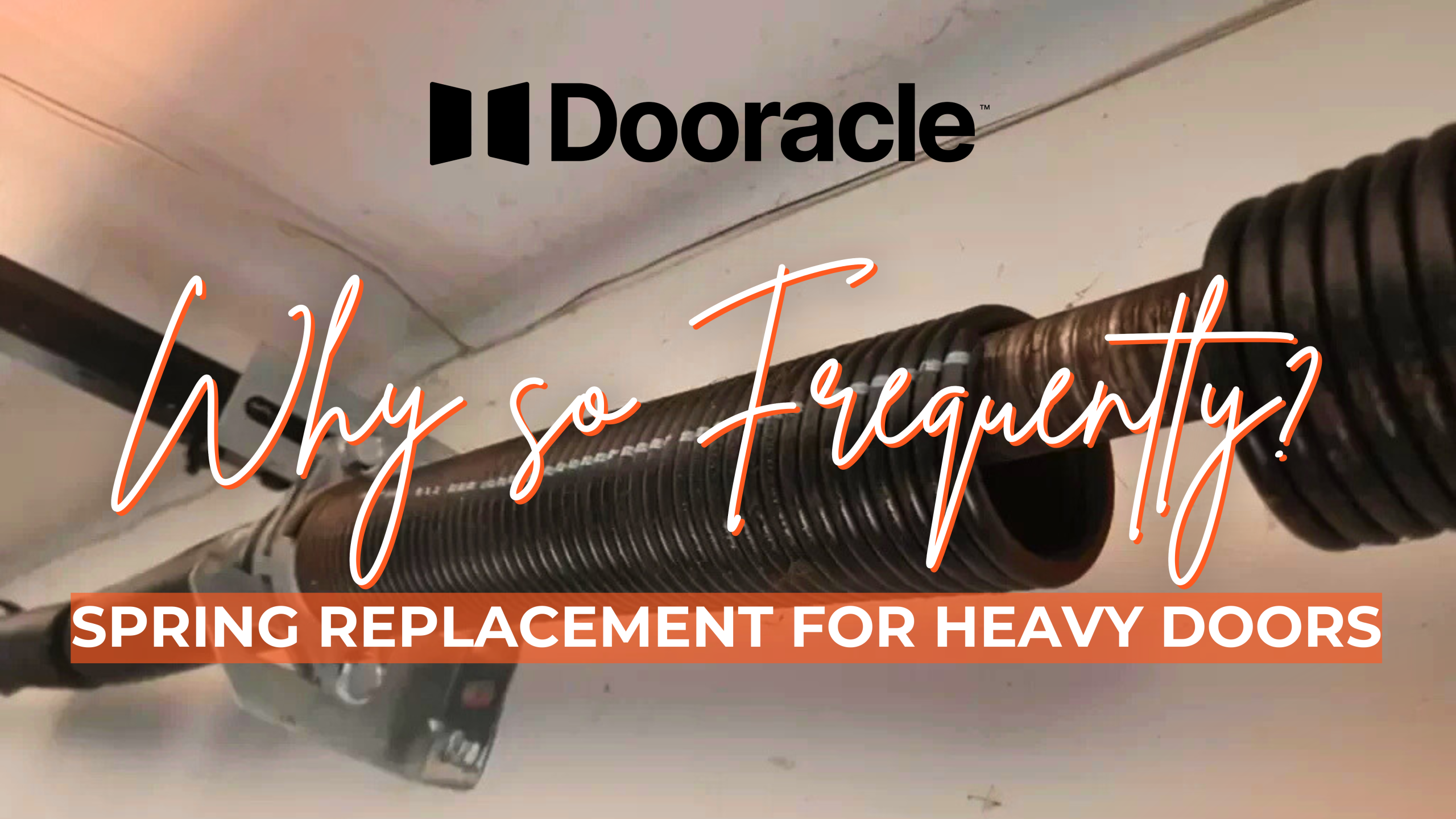
Another reason you can lift your door easily with the opener or by hand is that garage door springs do all of the heavy lifting for it. What are the different types of garage door springs?
01
Torsion Springs
These springs are mounted directly above the door and twist to help lift the door.
02
Extension Springs
These springs stretch along the sides of the door to help support its movement.
Torsion springs are used more commonly in the case of heavier doors as they offer a better grip and lifespan. When the springs fail to work, you may be stuck with a garage door that is too heavy for easy opening and causing other operational problems — which could eventually wear out your opener or strain the tracks.
Garage Door Springs: Their Average Lifespan
01
What a Spring Cycle Means
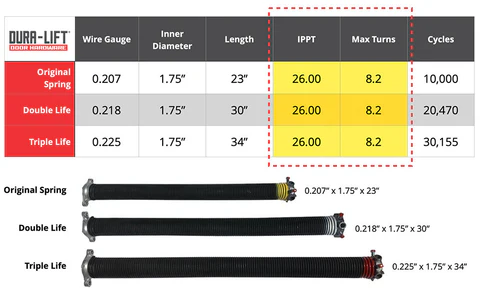
Garage door springs are typically rated and come in 10,000 cycle counts – one unit of a “cycle” being an interpreted opening AND closing of the garage door.
02
ypical Rating (10,000 Cycles)
Cycles: Garage door springs are typically rated and come in 10,000 cycle counts.
03
Average Use (6 Times Per Day)
The average homeowner uses their garage door 6 times per day, leading to approximately ten years of beneficial usage after which a more modern replacement is in order.
04
Heavy Doors Reduce Lifespan Faster
Heavy garage doors add even more strain to springs and will eventually shorten their working life.
The Importance of Regular Spring Replacements for Heavy Doors
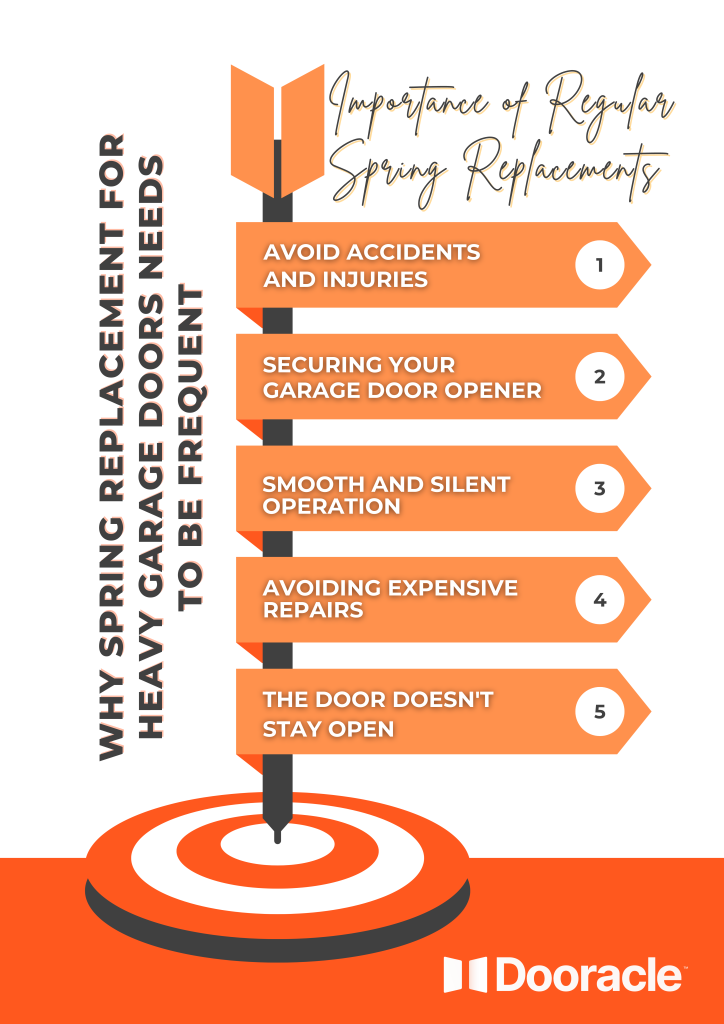
Avoid Accidents and Injuries
Garage door springs operate under high tension, and when they break, the door can slam down or fall. With heavy doors, the risk of injury increases. Manufacturers recommend annual inspections and replacing springs as soon as problems are detected.
Protect Your Garage Door Opener
When springs weaken, the door becomes heavier and forces the opener to work harder. This can cause the opener to wear out early, and in some cases, it may not lift the door safely without spring support.
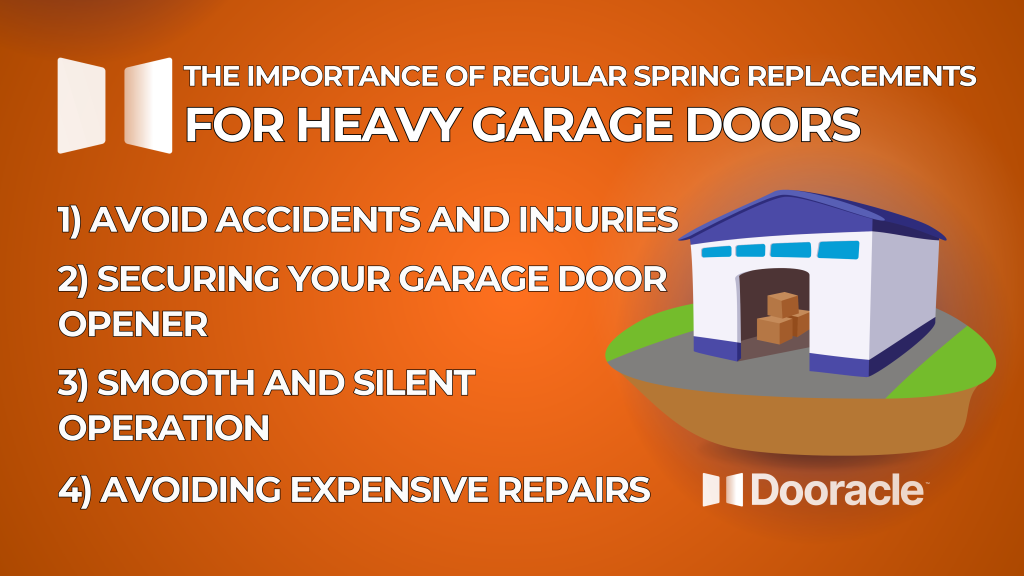
Smooth and Silent Operation
Old springs can cause uneven door movement and loud squeaking. Heavy doors need strong, stable springs to operate smoothly and quietly, reducing wear on other parts.
Avoid Expensive Repairs
A snapped spring can damage other parts like cables, tracks, and rollers. Replacing springs early helps prevent bigger repair costs and system damage.
When to Change Garage Door Springs
Knowing the symptoms of a tired suspension can at least keep you from being caught off guard, so read on as we ID worn-out springs. These are the typical signs you need a new one:
- The Door Seems Heavy
- Uneven Door Movement
- Visible gaps or coils placed apart
- Operating Noisily
- The Door Doesn’t Stay Open
How Long Do Garage Door Springs Last?
Regular homeowners should consider a spring inspection each year, and springs may typically be expected to last between 7-10 years. But if you have a large or heavy garage door, and it gets used multiple times per day most days of the week then there is not going to be any way your springs will last until year 10.
Why You Should Not Do DIY Spring Replacement
Why You Should Not Do DIY Spring Replacement
Even fixing the springs on your garage door can be a dangerous job, as they are under such a high amount of tension. Replacing a garage door spring DIY can be dangerous and may result in injury or even damage to one's property.
At Affordable Garage Door Repair, our technicians have been trained to replace springs in the safest way possible so that your door will continue functioning properly and securely. We will also check over the rest of your system to guarantee that all parts are in perfect working condition.
Maintain Your Garage Door Springs
Here are some tips for making sure you don't get caught with a stuck or malfunctioning spring. Although spring replacement is a fact, you can take measures that will prolong the life of your springs:
- Spring Lubrication: Apply a Silicone-Based lubricant every 3–6 months to keep your springs from scraping and corrosion.
- Conservation Tip: Cut back on how frequently you use the door, as each time it opens and shuts triggers a cycle of work.
- Spring Check: Examine springs each year for wear and tear, rusting, or coils that are starting to stretch out. This needs an easy inspection (and modification if needed).
- Hire A Professional: Get a professional to check your system every year so that you can spot and address issues before they become significant.
Conclusion
Heavy garage doors require frequent spring replacements in order to maintain safety and efficiency of operation. Ignoring your springs can cause accidents, the opener to fail early, and expensive repairs. You can help keep your gate operating smoothly, reliably, and trouble-free by staying proactive about inspections and timely replacements.
Heavy Door Springs Replacement at Affordable Garage Door Repair, spring replacements are what we were trained to be the best at. Our specialists are well-trained and will replace or repair your springs without putting you at risk. Get in touch with us today to get your garage door spring replacement scheduled so you can expect years of problem-free operation.