Why You Should Not Ignore Odd Noises from Your Garage Door
Explore our latest guides and tips designed to help you stay informed and make smarter decisions.
Introduction
Are you hearing odd noises, whether squeaks, rattles, or grinding every time your garage door opens and closes? These sounds might sound harmless enough, but neglecting those weird noises from your garage door can put you on the fast track to expensive repairs, safety hazards, or a nasty surprise in the form of an unexpected breakdown.
We’ve Seen This Turn Into Emergencies Fast
We know first-hand at Affordable Garage Door Repair just how fast the
garage door problem not taken care of spirals into an emergency. This
guide will touch on the problems of ignoring such noises and also advise
on how to deal with them early enough before they develop into bigger
ones.
Why Garage Doors Start Making Strange Noises
The garage door itself is a complicated system that consists of many
moving components, all working in concert to make the function happen.
Parts like springs, rollers, or tracks can also wear out and become
misaligned over time which will create strange sounds. Some of the
common reasons for these strange noises are;
Common Reasons for These Strange Noises
Worn-out rollers or hinges
Loose bolts and hardware
Dry or unlubricated tracks
Misaligned tracks
The Dangers of Neglecting Weird Noises
It might be easy to overlook the strange noises your garage door makes,
but the consequences can make it quite annoying.
01
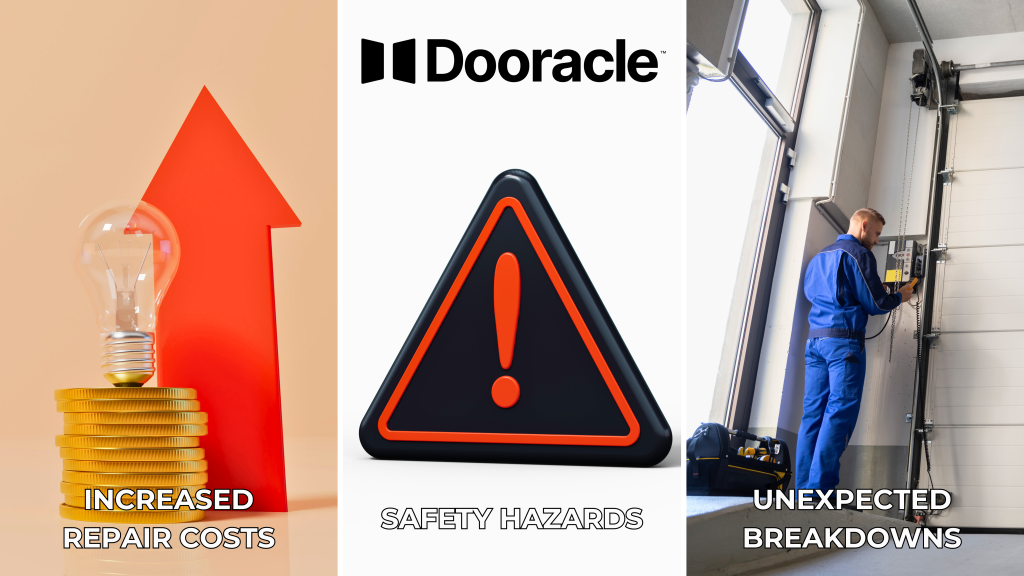
Increased Repair Costs
Use the full bullet explanation about loose bolts, dry rollers, track damage, and expensive repairs.
02
Safety Hazards
A broken garage door is always very risky for you, your family, and
the other things that are inside. When springs are broken or when
tracks come out of alignment the door might suddenly fall causing
untold property damage, and bodily harm.
03
Premature Wear on the Opener
Those creaky, clunky sounds vehicles so frequently make suggest the
door is having a difficult time moving. This leads to further stress on
the opener as it has to exert itself more for the door to be lifted. This
can eventually cause the opener to wear out early and possibly have
to be replaced, an expensive repair.
04
Unexpected Breakdowns
If your garage door starts to be quiet, it can be a sign that is telling
you one component is about to wear out. Constant stress on the
springs, cables, and rollers, break without warning. Then, without
warning fast failure can away leave your vehicle stuck inside the
garage or create a nonfunctional door right when you need it most.
05
Reduced Home Security
Steer clear of a weak point in your home security with a garage door
that won't close properly due to mechanical problems. A broken
garage door leaves your home vulnerable to thieves.
Warning Signs to Watch For
Audible Snapping noises
Doors jerking and stopping abruptly a lot
TIP: When your garage door starts making loud noises or not operating properly, have it inspected right away
What Your Garage Door Noise May Be Telling You
To some degree, it is true, that specific problems create different noises.
Common Noises and Their Possible Interpretations
01
Squeaking or Squealing
Sometimes you will hear squeaking or squealing which could be from dry rollers and hinges needing some lube.
02
Rattling or Clanking
When one or both sensors show a blinking light, it means that the two of them are not aligned correctly.
01
Grinding
Worn rollers or misaligned tracks.
02
Popping
If the springs are still in place, it indicates a problem of tension
Not Sure What’s Causing It?
If you are not sure what is producing the sound, then get an inspection from a suitable technician.
Prevent Garage Door Noise
Silencing your garage door: steps to make your noisy gateways less noisy
Prevention Steps
01
Regular Lubrication
To help maintain the garage door in great condition, you should
apply a Silicone-based lubricant to the rollers, hinges, and springs
every few months.
02
Tighten Hardware
Inspect the tracks and opener for loose bolts, nuts, and screws. If so:
fasten them up to avoid noisy rattling.
03
Check Tracks and Rollers
Check for wear, rust, or damage on the tracks and rollers. This will
prevent damaged parts from damaging new ones.
04
Balance the Door
Use the full paragraph explaining removing the opener and lifting manually.
When to Call a Professional
Broken springs or misaligned tracks generally need professional help to fix
them safely. If the garage door is loud, or jerky to open or close after
reaching the installation position give a call to a professional.
Affordable Garage Door Repair Can Help
At Affordable Garage Door Repair, our technicians are experienced and
skilled in identifying garage door problems with lightning speed coupled
with exceptional performance at work. From lubrication to part replacement
or a complete check-up we have everything you need.
Conclusion
The last types of issues that may cause weird noises from your garage door
are the most serious, and should definitely get fixed ASAP. These types of
noises should be addressed early to prevent expensive repairs and perform
safe operation, maintaining your garage door functioning properly.
If your garage door is quacking, honking, or coughing obnoxiously loudly
when opening and closing are done then it's time to seriously get some
garage opener repair! To get the peace of mind that your dog is in tip-top
working condition, call Affordable Garage Door Repair today for a
professional inspection.
Contact Us
Should you experience any problems with your garage door while trying to manually operate it, we encourage you to call Uplift Garage. Our friendly and experienced technicians are here to help. Call us today to speak with one of our experienced technicians
The Reason Garage Doors Openers Lose Their Range and How to Fix It
When you are accustomed to opening the door from a distance, then a garage door opener with a limited range is very problematic. After a time, you shall observe that the remote requires you to get nearer and farther in order for it to work, which is very unhandy and ineffectual. To regain the ease of long-range operation, it is important to understand why garage door openers lose range and how to fix the problem.
Is Your Garage Door Prepared for Winter? Cold-Weather Maintenance Tips
With winter quickly approaching, you want to be sure your garage door is ready for the ice and snow. Garage doors experience additional stress through the winter months, and with that pressure comes an effect on their
performance and longevity. It may seem like a no-brainer, but much of what you can do to prepare your garage door for winter is also fall maintenance for a potential spring emergency if not done. It's all about avoiding those surprise frozen parts or sluggish movements that could otherwise leave your garage door virtually useless until you've thawed everything out!
Typical Problems with Garage Door Opener Wall Controls
Garage door opener walls allow you to open and close your garage door from inside the garage without having to use a remote. As with most devices, occasionally a problem may arise that keeps wall controls from working properly. By being aware of the common problems and knowing how to troubleshoot your garage door opener wall control, you can keep your system running well and avoid surprises.