Understanding Noise Levels in Garage Door Openers
Quiet garage door openings are essential to keep the peace. But first understand the sources of sound in traditional garage door openers:
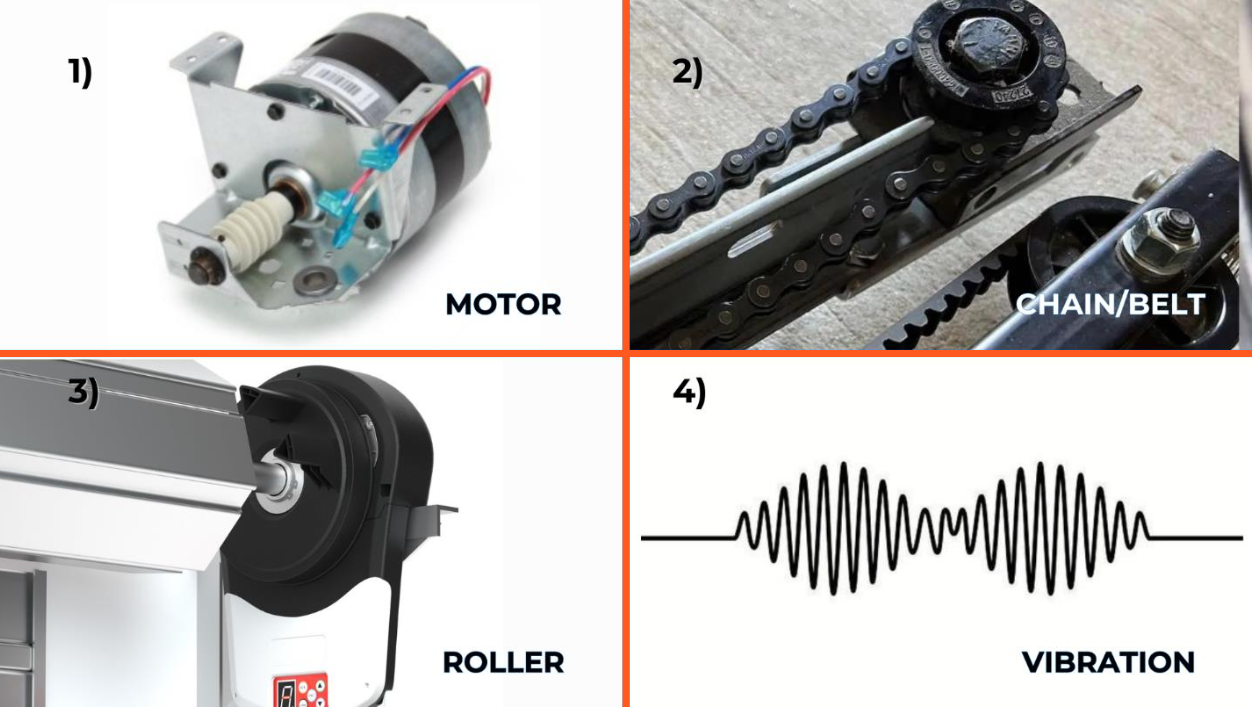
1. Motor Noise
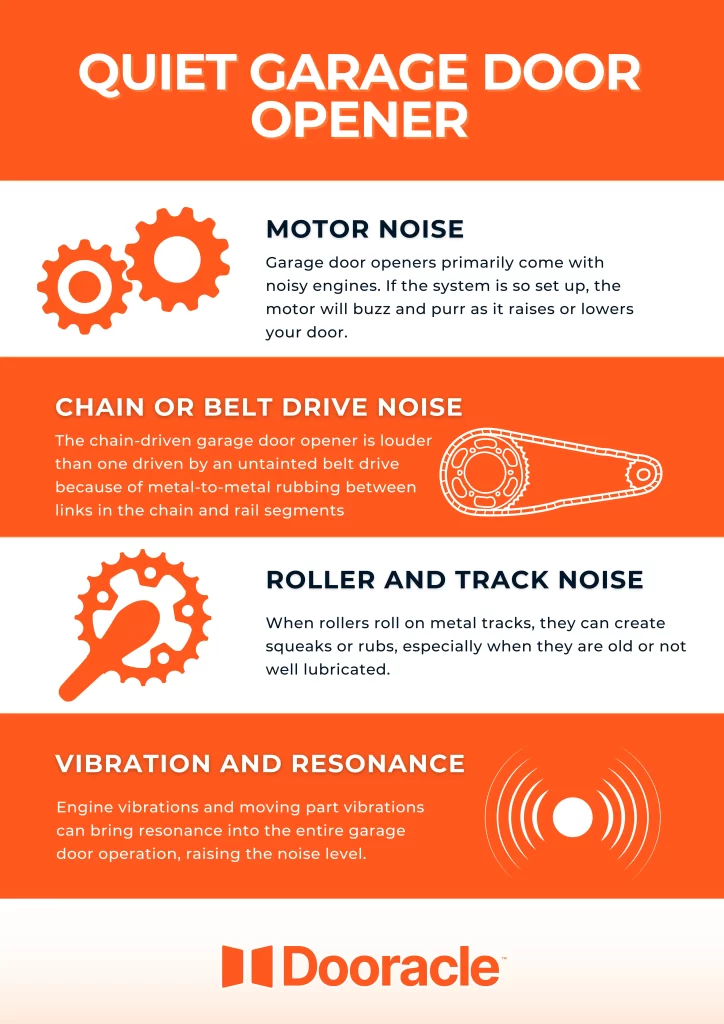
Garage door openers primarily come with noisy engines. If the system is so set up, the motor will buzz and purr as it raises or lowers your door.
2. Chain or Belt Drive Noise:
The chain-driven garage door opener is louder than one driven by an untainted belt drive because of metal-to-metal rubbing between links in the chain and rail segments for their own sake – louder as well.
3. Roller and Track Noise:
When rollers roll on metal tracks, they can create squeaks or rubs, especially when they are old or not well lubricated.
4. Vibration and Resonance:
Engine vibrations and moving part vibrations can bring resonance into the entire garage door operation, raising the noise level.
Features of Quiet Garage Door Openers
Quiet garage door openers employ different features and technology to reduce the amount of noise and vibration during operation:
Belt Drive System
The rubber or polyurethane belt used on belt driven garage door openers is much quieter and smoother than metal chain systems of the past.
DC Motor Technology
Quiet and highly efficient, the direct current (DC) motor is less noisy than the old AC kinds, generating less vibration during operation.
Vibration Isolation
Vibration isolation systems and sound-proofing materials used on some models of quite garage door openers reduce the vibrations as well as the noise of motors in operation.
Soft Start and Stop
The soft start-stop mechanism is used to allow the door to gradually speed up and slow down. The result is fewer sudden jolts but, at the same time, lower noise levels.
Roller and Track Design:
Well-made rollers and nylon(polyethylene) covered tracks make for less friction, which means the door runs smoother out of earshot from your living room or study.
Sound-Deadening Technology
Certain models incorporate sound-deadening materials or insulation to absorb and reduce the noise from engine working parts.
Benefits of Quiet Garage Door Openers
For homeowners, it worsens quieter garage door openers:
1. Peace and Quiet:
Now you can enjoy a quieter and more peaceful garage environment, without the disruptive noise of noisy motors or chains jangling around.
2. Reduced Disturbance:
Unlike in the past incarnations by tamed doors that are cranky and always making a racket at odd moments, today’s garage doors help to keep things quiet. That helps family members, neighbors and even household pets since early morning or late-night activity is now conducted in relative tranquility.
3. Improved Comfort:
For living spaces adjacent to or above the garage, such as bedrooms or home offices, create a more comfortable and relaxing atmosphere.
4. Enhanced Security:
Moving quietly in and out of the garage doors makes opening and closing doors a much-reduced risk of unwanted attention from would-be burglars.
5. Longevity:
By adopting a quieter model, you are typically shown to be putting less stress on garage door components. This smooth operation must, potentially, increase the working life of your garage door and reduce maintenance costs in future
Considerations When Choosing a Quiet Garage Door Opener
1. Noise Ratings:
Keep an eye out for garage door openers with low decibel (dB) ratings, meaning they make less noise. Try to find a model below 60 dB for little or no outside interference at all hours of the day.2. Type of Drive:
In the quest for quiet garage door openers, consider installing a direct drive opener with minimal moving parts and noise.3. Motor Power:
Ensure that the opener has enough motor power to lift and lower your garage door smoothly with no strain, groans or barks of despair.4. Compatibility:
Make sure the garage door opener is appropriate for your size, weight, and type of door as well as any additional features you may need.5. Warranty and Support:
Choose a brand with established options for replacement or repair when things go wrong–or just to answer questions.Installation and Maintenance Tips
1
Professional Installation
Consider hiring a professional garage door technician for proper installation that will ensure optimal performance and warranty coverage.
2
Regular Lubrication
Keep moving parts, including rollers, tracks, and hinges, well-lubricated to lessen the friction and noise during operation.
3
Periodic Inspection
Regularly inspect the garage door opener, along with its tracks and accessories, to discover any telltale signs of wear and tear or misalignment.
4
Tighten Loose Hardware
Check and tighten any loose bolts, nuts or screws on the garage door opener and track system to avoid excessive vibrations or noise.
5
Replace Worn Parts
if your rollers or hinges show signs of being worn or damaged, change them now before poor performance follows. Your garage door open-her will continue to work smoothly and quietly.
Conclusion
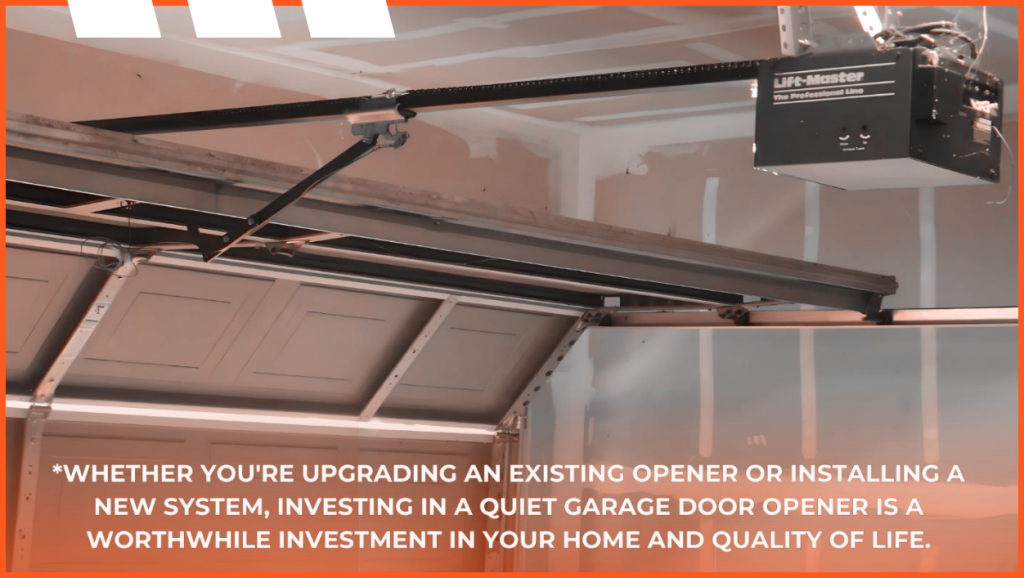
A quiet garage door opener brings many benefits, including less disruption from noise, greater comfort and additional security in your life. If you understand the features, benefits and considerations of quiet garage door openers and keep to proper installation and maintenance practices, you’ll have a quiet and peaceful garage for years to come