Understanding Standard Garage Door Sizes
Standard garage door sizes vary depending on factors such as the number of vehicles to accommodate, available space, and regional building codes. However, the most common standard sizes for residential garage doors include:
These standard sizes provide a general guideline for garage door dimensions, but variations are common based on specific requirements, preferences, and architectural designs.
Single Car
Garage Doors
Typically range from 8 feet to 9 feet wide and 7 feet to 8 feet tall.
Double Car
Garage Doors
Usually measure 16 feet to 18 feet wide and 7 feet to 8 feet tall.
RV or Boat
Garage Doors
Can be larger, ranging from 10 feet to 12 feet wide and up to 14 feet tall to accommodate oversized vehicles or equipment.
Factors Influencing Garage Door Size
Several factors influence the size of a garage door, including:
Number of Vehicles
The number and size of vehicles to be parked in the garage determine the width and height requirements of the garage door.
Vehicle Size
Larger vehicles, such as trucks, SUVs, or recreational vehicles (RVs), may require wider and taller garage doors to ensure adequate clearance and accessibility.
Storage and Workspace Needs
Additional space may be needed for storage, workshop areas, or recreational equipment, influencing the overall dimensions of the garage and the garage door.
Architectural Design
The architectural style and design of the home, as well as the layout of the garage space, can impact the size and configuration of the garage door to ensure aesthetic harmony and functionality.
Building Codes and Regulations
Local building codes and regulations may prescribe minimum requirements for garage door sizes, clearances, and safety features to ensure compliance with safety and structural standards.
Selecting the Right Garage Door Size
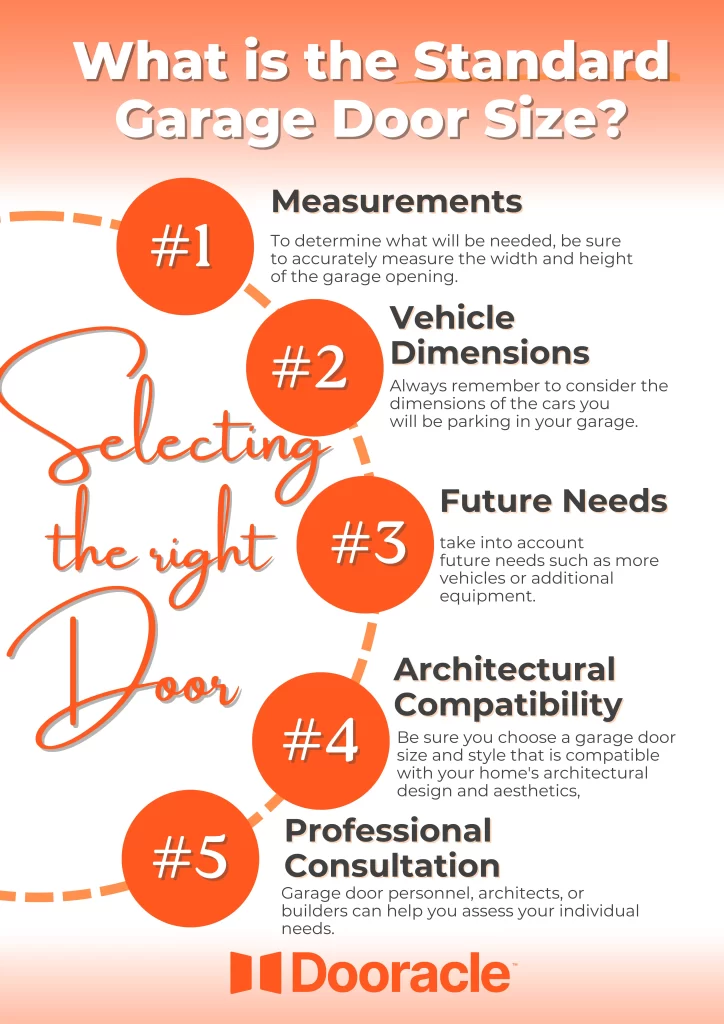
When selecting the right garage door size for your home, consider the following:
Measurements
Accurately measure the width and height of the garage opening to determine the appropriate size for the garage door.
Vehicle Dimensions
Take into account the dimensions of the vehicles you plan to park in the garage, including width, height, and length, to ensure sufficient clearance and accessibility.
Future Needs
Anticipate future needs for additional vehicles, equipment, or storage space and select a garage door size that can accommodate potential expansions or changes.
Architectural Compatibility
Choose a garage door size and style that complements the architectural design and aesthetics of your home, enhancing curb appeal and overall visual appeal.
Professional Consultation
Consult with garage door professionals, architects, or builders to assess your specific requirements, obtain expert advice, and ensure proper installation and functionality of the garage door.
Conclusion
The standard garage door size varies depending on factors such as the number of vehicles, available space, and architectural design. Understanding these factors and considering your specific needs and preferences are essential for selecting the right garage door size for your home. By following the guidelines outlined in this guide and seeking professional consultation when needed, homeowners can choose garage doors that provide optimal functionality, aesthetics, and convenience while enhancing the value and appeal of their properties.