
1. The Importance Of Lubricant On Garage Doors
Applying lubricant to the moving parts of your garage door will limit friction. It also helps rollers, hinges, and springs from wearing out too quickly. Without it, grinding noises, and slower operation will develop over time with the potential to break components that require expensive replacement. Regular lubrication is essential for your garage door to operate silently and without stress over time.
Key Benefits of Lubrication:
-
Decreases Friction Of Moving Parts
-
Prevents rust and corrosion
-
Increase the overall life of components within the garage door
-
Reduces the chance of needing future repairs
-
Ensures quiet operation
2. Testing the Garage Door Opener and when Should Lube your Garage Door?
You can lubricate your garage doors by moving parts two twice a year and that is ideal for most homeowners. Nevertheless, if you are in a city with harsh weather such as high humidity, rain, or low temperature then you may have to lubricate your door more often. And if you live in a climate like hot and humid Houston, where metal parts will expand and contractregularly, additional lubrication is a necessity.
Recommended Schedule:
Most Homeowners:
Twice a Year
Every three months:
For those in very cold climates or with high-use
Top-up after repairs:
If you have had parts replaced or repaired, always ensure that the new parts are adequately lubricated.
3. Picking the best lubricant for your garage door
While more is better in many instances when it comes to bike lube, that’s just not the case — using too much of the wrong product can do more harm than good. Some silicone or lithium-based systems are a great option for garage doors as they are designed for the moving components of a garage door. The thin, non-attracting layer, as compared to traditional lubricants such as grease or oil is less prone to collect the dust and debris that can gum up the tracks or rollers.
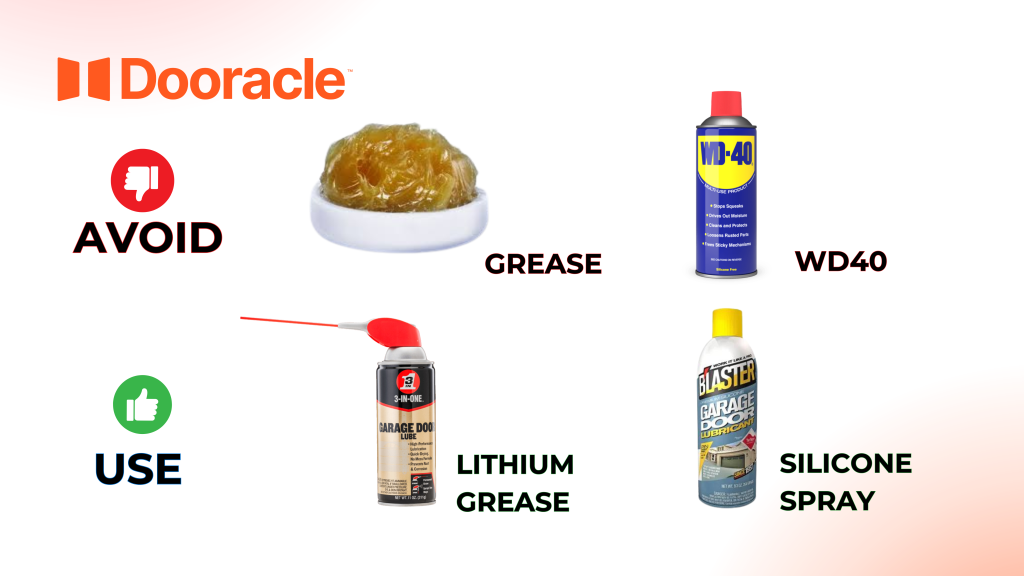
Avoid These Products:
The post WD-40
Lubricants such as Grease:
Best Lubricants to Use:
Silicone Spray Lubricant:
Lithium Grease:
4. Guide to Lubricating a Garage Door
So, how should you lubricate your garage door? Using these few simple steps, Your Garage door will continue to operate smoothly and efficiently.
Step 1: Gather Your Supplies
Here are the things you will need before starting:
-
Silicone or Lithium Based Lubricant Spray
-
A clean cloth or rag
-
A ladder (if needed)
Step 2: Clean the Tracks
-
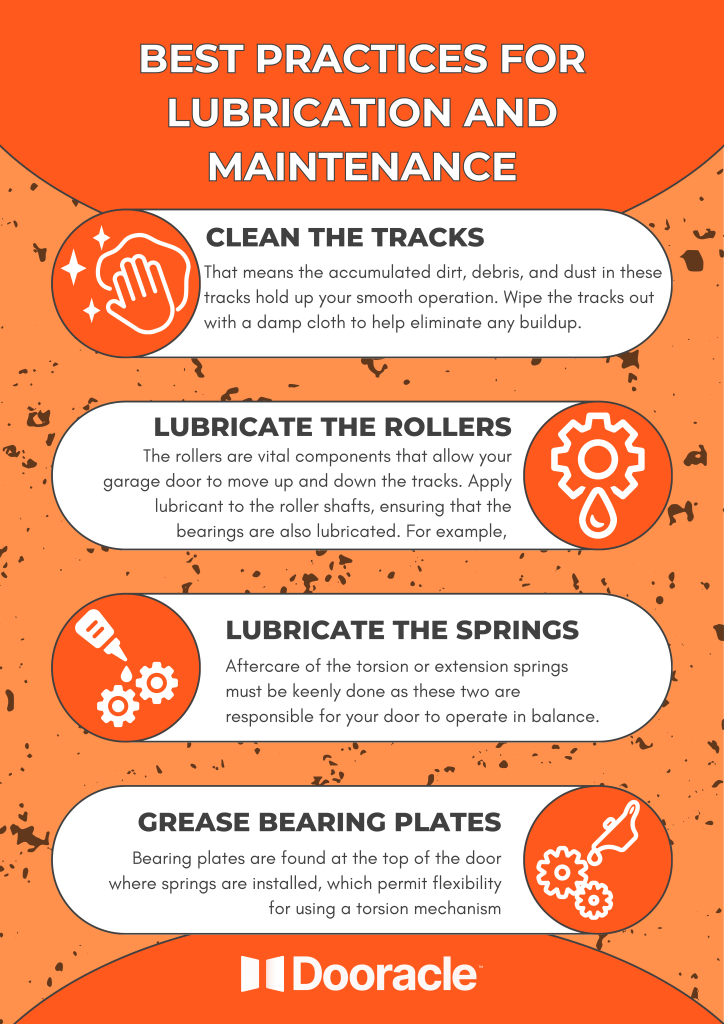
Never lubricate the tracks, but also ensure they are clean. That means the accumulated dirt, debris, and dust in these tracks hold up your smooth operation. Wipe the tracks out with a damp cloth to help eliminate any buildup.
TIP: Do not apply any lubricants in the tracks as this can make dirt dust stick and fault out the rollers. Just ensure the tracks are kept clean and free from any debris.
Step 3: Lubricate the Rollers
-
The rollers are vital components that allow your garage door to move up and down the tracks. Apply lubricant to the roller shafts, ensuring that the bearings are also lubricated. For example, if you have nylon rollers resist spraying the actual nylon part of it — just focus on metal parts.
Step 4: Lubricate the Hinges
-
Grease Hinges at Pivots These joints provide bending facilities to the door sections. A short spray at a hinge joint on each side will prevent friction and provide smooth, quiet operation of the door.
Step 5: Lubricate the Springs
-
Since the springs are under a very high degree of tension, they serve a crucial purpose in assisting with opening the door. Spraying the length of the spring with lubricant will help prevent rust and ensure good free movement. Aftercare of the torsion or extension springs must be keenly done as these two are responsible for your door to operate in balance.
Step 6: Grease Bearing Plates
-
Bearing plates are found at the top of the door where springs are installed, which permit flexibility for using a torsion mechanism. The springs rotate quickly in these plates, which allows for the smooth operation of rotation. Lubricate each bearing plate lightly.
Step 7 — Oil the Garage Door Lock
-
If your garage door has a manual lock, you should lubricate the locking mechanism to ensure that it moves without getting jammed. This is especially the case when you rarely use the lock.
Step 8: Test the Door
-
Then, wipe all the extra lubricating parts from lubricating after that open and close the garage door a few times to allow the lubricant in each moving part. But if you hear your door grinding or squeaking, look it over again for good measure; maybe a spot needs another drop of lube.
5. Other Garage Door Maintenance Tips For Longevity
Regular lubrication and a little bit of maintenance are the keys to making sure your garage door lasts as long as possible without any untimely breaks.
6. When to Call a Professional
Deleting the garage door lubrication is something you can do to avoid doing these things. If you find that there are any of the following problem signs at your garage door, it is time to call an expert for Rochester Garage Door Repair.
Here are some common garage door issues customers encounter, if your garage door opener is not working race with the diagnosis and repair to an electric part sign.
We provide tune-ups that will ensure your garage door continues to work well. Whether or not you think your door is rotting, if you want us to help make it look like new when we are done pop over an email for a FREE estimate.

Conclusion
Keep your door working correctly by lubricating it Read more » If you maintain and handle garage doors properly, they can be forgotten about for long periods. According to the best practices you can keep your garage door operating normally, reducing the inconvenience of untimely garage door breakdowns.
Affordable Garage Door Repair is proud to offer a full-service range of garage door services from regular maintenance to emergency calls. Call us now to schedule your tune-up or learn more about our low-cost repair services.