

Garage Door Glass Replacement: A Comprehensive Guide

Explore our latest guides and tips designed to help you stay informed and make smarter decisions.

Garage Door Glass Replacement: A Comprehensive Guide

Explore our latest guides and tips designed to help you stay informed and make smarter decisions.

Introduction

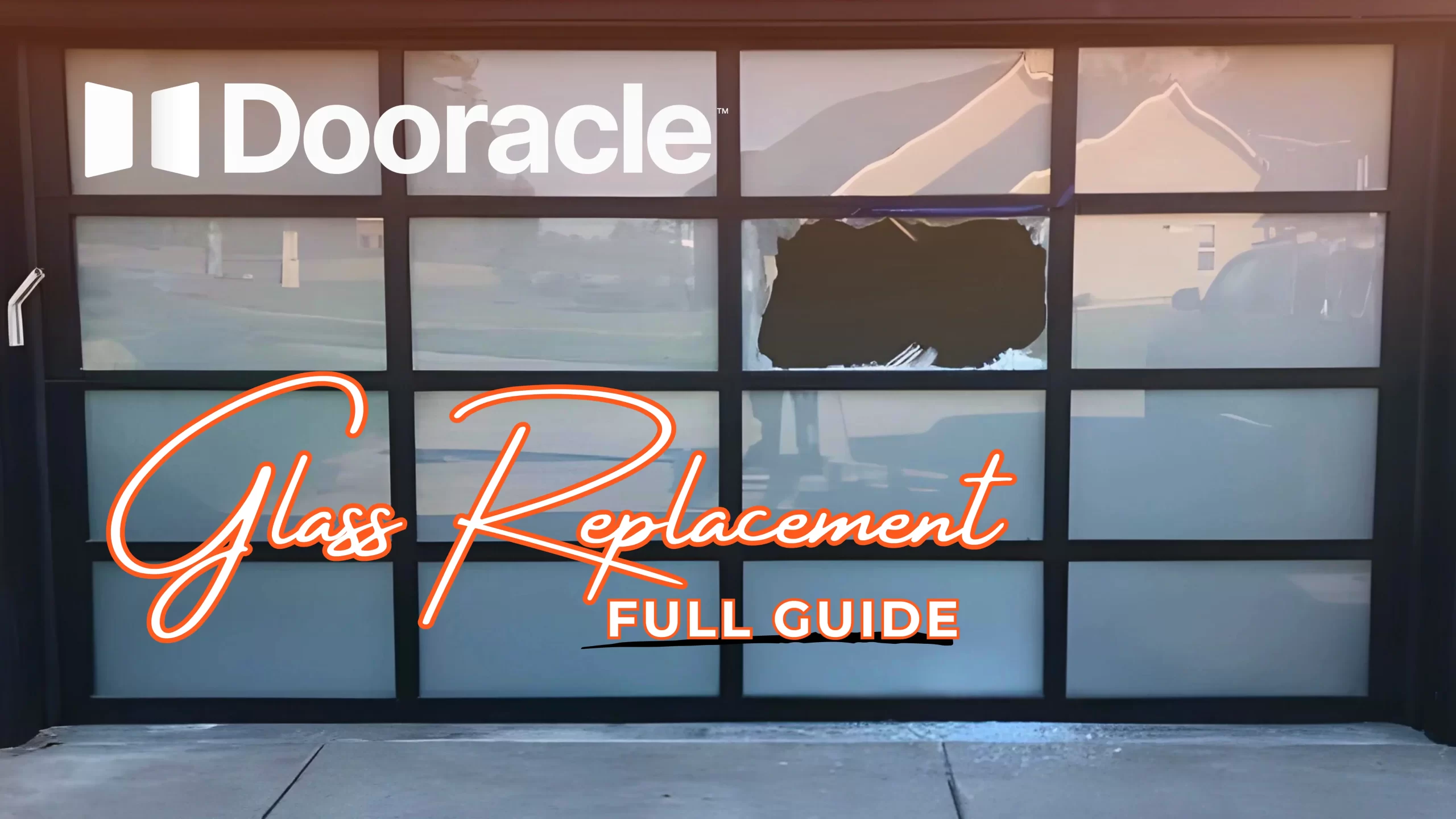
Garage door glass replacement is a common maintenance task that homeowners may need to undertake due to damage, wear and tear, or aesthetic upgrades. Whether your garage door has a single pane or multiple glass panels, replacing broken or damaged glass requires careful planning, proper tools, and attention to safety. In this comprehensive guide, we’ll walk you through the steps involved in garage door glass replacement, from assessing the damage to completing the installation, ensuring a smooth and successful repair process.

Assessing the Damage

Inspect the Damage

Thoroughly examine the glass panels on your garage door to identify any cracks, chips, or shattered sections. Determine the extent of the damage and whether the glass needs partial or complete replacement.

Measurements

Measure the dimensions of the damaged glass panel(s), including width, height, and thickness, to ensure accurate replacement. Take precise measurements to order the correct size replacement glass.

Glass Type

Identify the type of glass used in your garage door (e.g., tempered, laminated, insulated) to ensure compatibility and safety compliance with local building codes and regulations.

55 c1 dooracle

Replacement Glass

Purchase replacement glass panels in the appropriate size, thickness, and type to match your existing garage door. Choose tempered or laminated glass for enhanced durability and safety.

55 c2 dooracle

Safety Gear

Wear safety gloves, protective eyewear, and appropriate clothing to prevent injuries from broken glass shards during the replacement process.

55 c3 dooracle

Tools

Gather tools such as a putty knife, glazing compound, glass cutter (if needed), suction cups or glass handlers, caulking gun, and screwdriver for removing and installing glass panels.

Removal of Damaged Glass

book open

Clear Work Area

Ensure the garage door is fully open and secure to provide ample working space. Lay down protective coverings or drop cloths to catch any glass fragments or debris.

compass

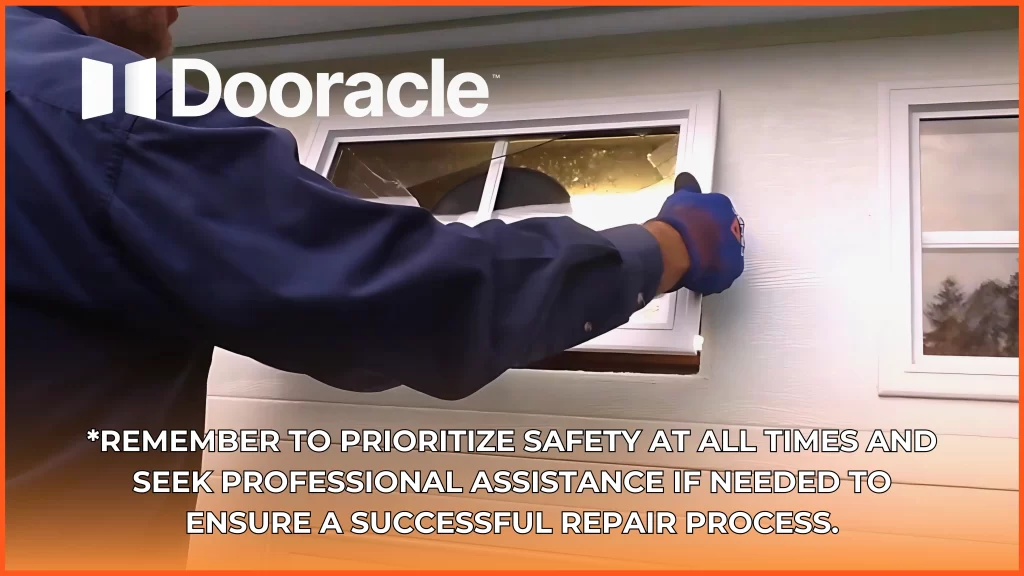
Remove Old Glass

Carefully remove the broken or damaged glass panel(s) from the garage door frame using a putty knife or screwdriver to pry away any retaining clips or moldings.

book

Dispose of Glass Safely

Dispose of the broken glass shards properly in accordance with local regulations. Use caution to avoid injuries when handling and disposing of glass fragments.
Installing Replacement Glass

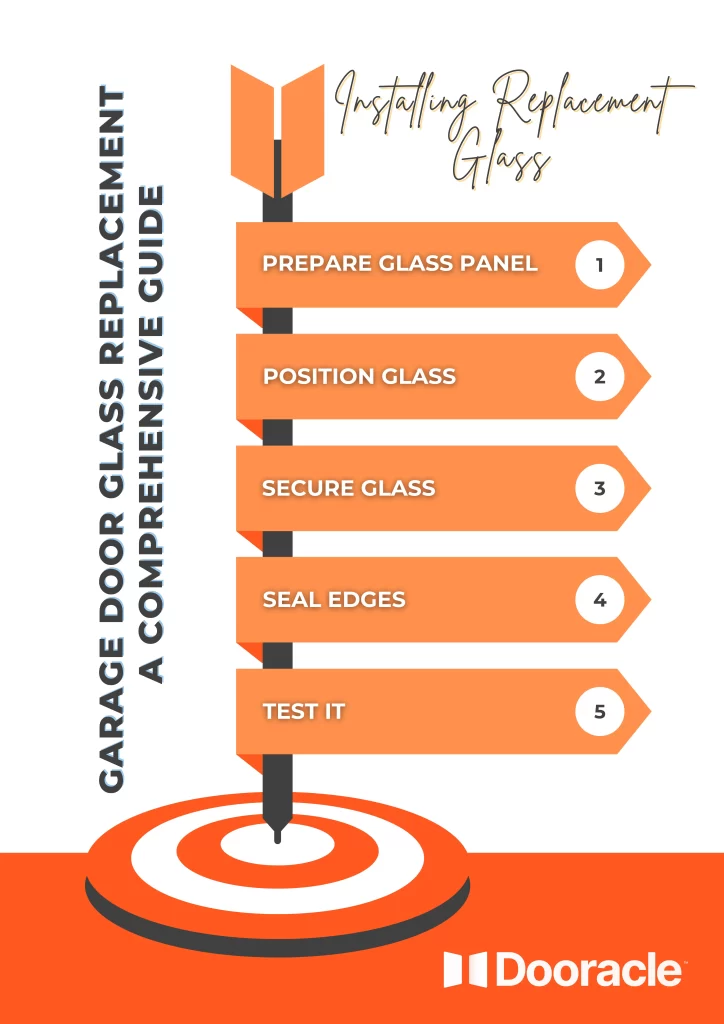
Prepare Glass Panel

Clean the edges of the replacement glass panel and apply a thin layer of glazing compound or silicone sealant along the perimeter to create a watertight seal.

Position Glass

Carefully position the replacement glass panel into the frame, ensuring a snug fit and alignment with any retaining clips or moldings.

Secure Glass

Use suction cups or glass handlers to hold the replacement glass in place while securing it with retaining clips, moldings, or fasteners. Tighten screws or clips evenly to prevent uneven pressure on the glass.

Seal Edges

Apply additional glazing compound or silicone sealant around the edges of the glass panel to seal gaps and prevent moisture intrusion.

Final Steps

Cleanup

Remove any protective coverings or drop cloths and clean the work area thoroughly to remove any glass fragments, dust, or debris.

Test Operation

Operate the garage door to ensure smooth and proper functioning of the replacement glass panels. Check for any signs of misalignment, binding, or friction.

Maintenance

Regularly inspect and maintain the garage door glass panels to prevent damage and prolong their lifespan. Clean the glass surfaces periodically with mild soap and water to remove dirt, grime, and residue.

Professional Assistance

If you're not comfortable or confident in performing garage door glass replacement yourself, consider hiring a professional garage door technician or glass specialist. They have the expertise, tools, and experience to safely and efficiently replace damaged glass panels, ensuring optimal performance and safety. By following these steps and precautions, you can successfully replace damaged or broken glass panels on your garage door, restoring its functionality, appearance, and safety. Remember to prioritize safety at all times and seek professional assistance if needed to ensure a successful repair process.

55 c n

Contact Us

Should you experience any problems with your garage door while trying to manually operate it, we encourage you to call Uplift Garage. Our friendly and experienced technicians are here to help. Call us today to speak with one of our experienced technicians

More Tips and Guides

Installing a Wind-Resistant Garage Door to Protect Your Home from Storms

A wind-resistant garage door is a great player for your home, especially if you live in a hurricane or strong storm-prone area. Normal garage doors are less resistant to high winds, which means they can be easily compromised, and you may have to deal with expensive repairs around your home afterward. Garage doors resistant to the wind are made for this type of circumstance, shielding your property from strong gusts.

The Reason Garage Doors Openers Lose Their Range and How to Fix It

When you are accustomed to opening the door from a distance, then a garage door opener with a limited range is very problematic. After a time, you shall observe that the remote requires you to get nearer and farther in order for it to work, which is very unhandy and ineffectual. To regain the ease of long-range operation, it is important to understand why garage door openers lose range and how to fix the problem.

Is Your Garage Door Prepared for Winter? Cold-Weather Maintenance Tips

With winter quickly approaching, you want to be sure your garage door is ready for the ice and snow. Garage doors experience additional stress through the winter months, and with that pressure comes an effect on their performance and longevity. It may seem like a no-brainer, but much of what you can do to prepare your garage door for winter is also fall maintenance for a potential spring emergency if not done. It's all about avoiding those surprise frozen parts or sluggish movements that could otherwise leave your garage door virtually useless until you've thawed everything out!