Garage Door Won’t Close

Explore our latest guides and tips designed to help you stay informed and make smarter decisions.

Garage Door Won’t Close

Explore our latest guides and tips designed to help you stay informed and make smarter decisions.

Introduction

A malfunctioning garage door can be a source of frustration and inconvenience, especially when it refuses to close properly. If you find yourself facing the common issue of a garage door that won't close, don't worry – you're not alone. In this comprehensive guide, we'll explore the potential reasons behind this problem and provide practical solutions to help you get your garage door back on track.

Introduction

A malfunctioning garage door can be a source of frustration and inconvenience, especially when it refuses to close properly. If you find yourself facing the common issue of a garage door that won't close, don't worry – you're not alone. In this comprehensive guide, we'll explore the potential reasons behind this problem and provide practical solutions to help you get your garage door back on track.
Repair Or Buy

A malfunctioning garage door is an annoying hassle, particularly if the issue is a door that refuses to close completely. Overhead doors that fail to shut are common malfunctions, but it is nothing you can’t handle. This paper provides an in-depth review of feasible causes and solutions. That is why you have nothing to worry about because this information might be makeshift for you as the expert.

Component Understanding:

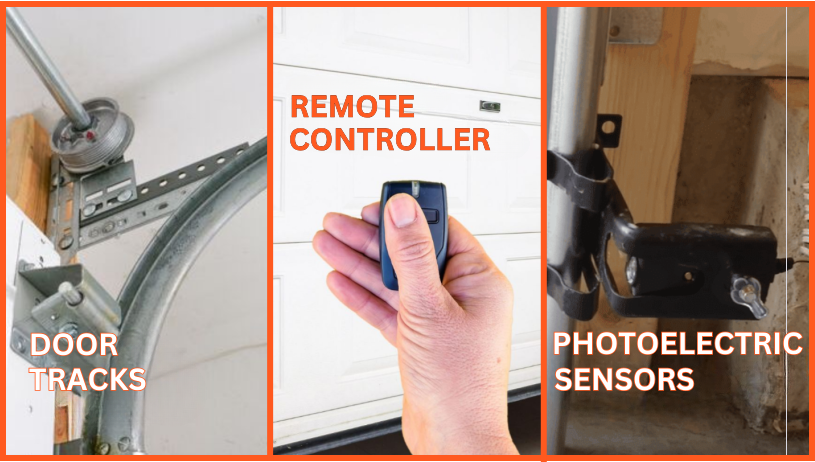
For a novice, it is possible to conclude the precise nature of the reason to get it to work accurately if you comprehend the underlying issues. Every overhead door system comprises the door itself, its opener,sensors, safety, and a remote control acting as its trigger.
Common Reasons for Garage Door Closure Problems

Obstructed Photoelectric Sensors:

The sensors, located on either side of the garage door, are responsible for detecting any obstacles present ahead. In case due to dust or any other reasons they become misaligned or face obstruction themselves, it can disrupt the closing of the door . Inspect the space and make sure that there are no obstructions across the sensors.

Malfunctioning Garage Door Opener:

If the garage door opener does not function properly, it won’t execute the command to close the door. Look for visible damage, listen whether the mechanisms make bizarre sounds and try to activate the door by turning on the motor

Broken Torsion Springs:

Garage torsion springs are essential for balancing the door weight and making it possible to lift it quickly. However, after the break, the springs make the door hard to pull up and keep it constantly open . Look for evidence of their damage and replace them if necessary.

Issues with the Garage Door Tracks:

The garage tracks guide the doors in the opening and closing. Yet, if the path is bent, dirty, or with obstructions, the door has trouble closing. Make sure the pieces are clean and straightened.

Remote Control or Keypad Problems:

If you are using a keypad or remote to command your garage door, make sure that the device functions properly and there is nobody is playing with it. Change the batteries if the remote is not working and reprogram the device if necessary

Solutions and DIY Fixes:

Repair Or Buy 815 x 462 px 1

Clean and Align Photoelectric Sensors:

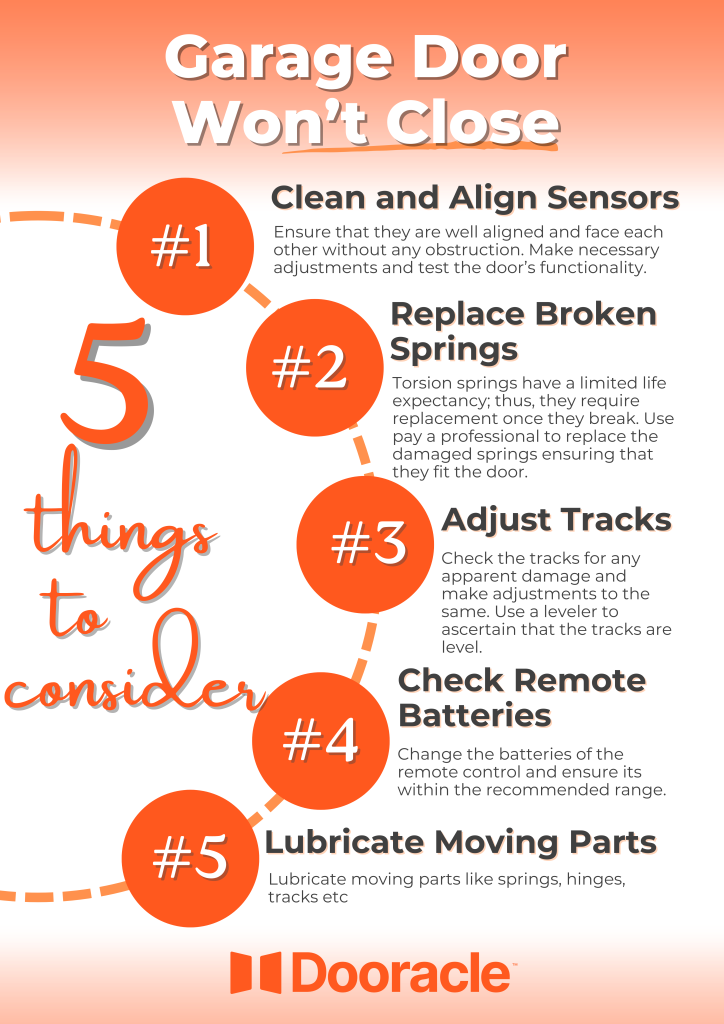
Clean the sensors gently using a soft cloth to remove any dirt or debris. Ensure that they are well aligned and face each other without any obstruction. Make necessary adjustments and test the door’s functionality.

Inspect and Maintain the Garage Door Opener:

Thoroughly check the garage door opener. Tighten any loose screws, lubricate the moving parts, and replace any damaged parts. If the door opener is beyond repair, purchase a new one for better service delivery .

Replace Broken Torsion Springs:

Torsion springs have a limited life expectancy; thus, they require replacement once they break. Use pay a professional to replace the damaged springs ensuring that they fit the door.

Check and Adjust Garage Door Tracks:

Check the tracks for any apparent damage and make adjustments to the same. Use a leveler to ascertain that the tracks are level. Regularly clean the tracks to avoid dirt accumulation.

Address Remote Control and Keypad Issues:

Change the batteries of the remote control and ensure its within the recommended range. If you use a key pad, reset the code and test the running. Avoid having electronic devices or appliances crowding the vicinity of the garage door opener as they may cause interferences

Conclusion:

In conclusion, a garage door not closing is a problem that can only be solved through a systematic and detailed approach. By learning the constituents, knowing the full incidence of this issue and choosing the suggested solutions, you will be able to have your garage door working properly again. However, if the troubleshooting process is not successful for you or the situation is too complicated, consulting a professional is a must. The responsibility is high, as a well-functioning garage door is not only a matter of convenience but also a measure of security of the entire house

Blog 3

Contact Us

Should you experience any problems with your garage door while trying to manually operate it, we encourage you to call Uplift Garage. Our friendly and experienced technicians are here to help. Call us today to speak with one of our experienced technicians

More Tips and Guides

How to Safely Remove Old Garage Door Weatherstripping

This continuous weatherstripping along the perimeters of your garage door is what fills any gaps that are present, preventing drafts from coming through while keeping moisture, pests, and dust out. However, overtime weatherstripping can deteriorate, crack, or lose its effectiveness and require replacement. Removing old weather stripes can leave some space for a more efficient one to get fit, and knowing how to do this safely can help you prepare the door. In the practical guide below, Affordable Garage Door Repair helps you safely and effectively remove old garage door weatherstripping while providing tips on cleanup and preparing for a new seal to be installed.

The Environmental Impact of Insulated vs. Non Insulated Garage Doors

If you are debating between an insulated or a non-insulated garage door, the decision may seem purely practical at first but is more environmentally unfriendly. Not only are insulated garage doors more energy-efficient (and reduce the carbon footprint of your home!), but non-insulated doors can contribute to higher energy use and increased greenhouse gas emissions. Knowing how each variety impacts energy use, environmental well-being and comfort can help homeowners create an environmentally conscious decision that will benefit the earth and their bank accounts. In this guide, Affordable Garage Door Repair outlines the environmental effects of insulated and non-insulated garage doors, emphasizing both the benefits of insulation and how to better utilize it for maximum energy efficiency.

Garage Door Backup Battery

Garage doors can prove hazardous during blackouts due to a power cutoff. It’s best to have a backup battery so if the power goes out, you’re still able to open and close your garage door. However, with so many options in the market, how do you decide which backup battery is suitable for your opener? Garage Door Backup Battery Buying Guide — In this guide by Affordable Garage Door Repair, we unpack everything you need to know about the device in order to choose one that fits your needs while also covering compatibility with your garage door opener, available capacities for purchase, battery life, and other fundamentals to consider when buying a new backup battery.