

Bypassing Garage Door Sensors in Just 3 Simple Steps

Explore our latest guides and tips designed to help you stay informed and make smarter decisions.

Bypassing Garage Door Sensors in Just 3 Simple Steps

Explore our latest guides and tips designed to help you stay informed and make smarter decisions.

Introduction

One of the parts that always comes with your garage door opener is the sensors. They are there to halt your door’s movement whenever they detect something that hinders the door from closing fully. While it is an excellent feature to prevent any accidents, it is one mean and irritating safety feature when the garage door sensors do not operate well. Therefore, the following is a comprehensive guide with various troubleshooting methods to maneuver their way into being able to bypass garage door sensors. Though, as dangerous and risky as this guide might seem, one should comprehend the risk and penalties of bypassing the sensor’s safety features.

Introduction

One of the parts that always comes with your garage door opener is the sensors. They are there to halt your door’s movement whenever they detect something that hinders the door from closing fully. While it is an excellent feature to prevent any accidents, it is one mean and irritating safety feature when the garage door sensors do not operate well. Therefore, the following is a comprehensive guide with various troubleshooting methods to maneuver their way into being able to bypass garage door sensors. Though, as dangerous and risky as this guide might seem, one should comprehend the risk and penalties of bypassing the sensor’s safety features.

Specifically, do you know why you shouldn’t bypass your garage door sensors?

It is assumed by most to be counterproductive due to the sensors’ role; it plays a pivotal role in safety. These are sensors that rest at the base of your garage door to prevent the door from closing when something is obstructing it. In the end, I can confirm that it is best seen, and while there are troubleshooting options, homeowners may feel the need to eliminate the hassle altogether. However, that poses many risks. Abandoning your garage door sensors entirely would risk, not only your safety, but also your home being vulnerable to burglary as well. Additionally, it is supposedly illegal in various states, which will lead to a penalty and legal issues for you.

Do-it-Yourself: A step-by-step approach to troubleshooting door sensors
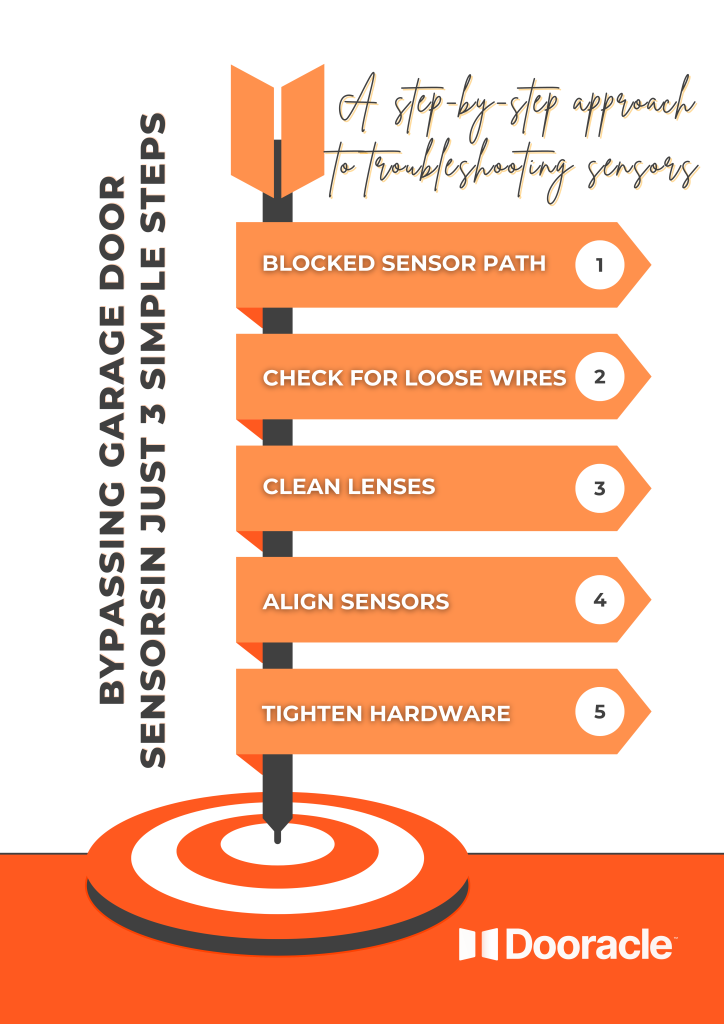
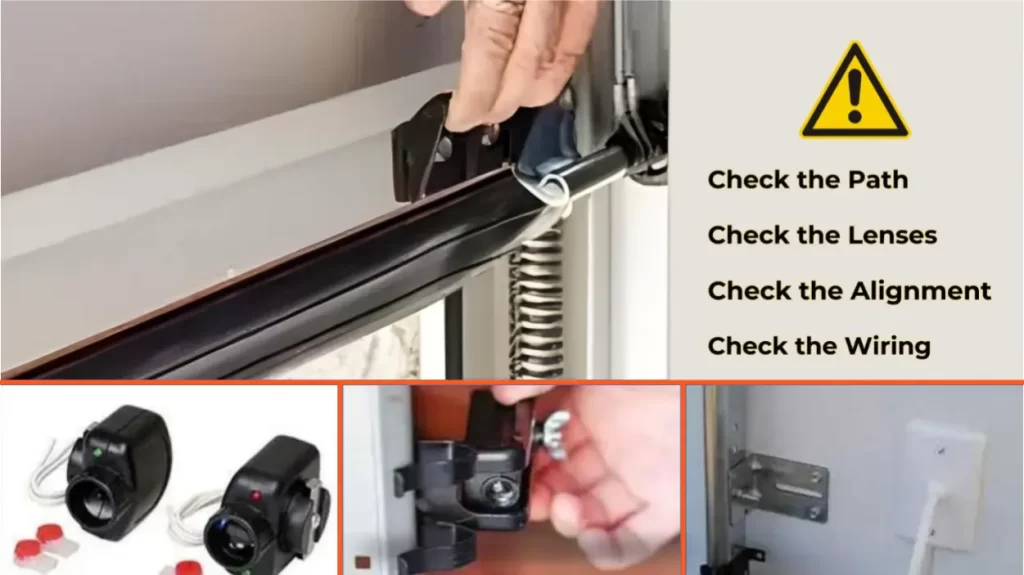
Before contemplating bypassing your garage door sensors, consider troubleshooting your sensors. Among the various common sensor issues include a blocked sensor path, loose wires, dirty lenses, and misalignment. Here is a guide on how to address each of the following

1. Blocked Sensor Path

Ensure that there are no objects in the sensor path and check the presence of direct sunlight

2. Loose Wires

Before checking the sensors for frayed or exposed wires, ensure that the garage door opener has no power. Reconnect or replace the damaged wires before reapplying power.

3. Dirty Lenses

Make sure the lenses that enable beam registration are clean. Ensure you do not misalign the sensors while cleaning them.

4. Sensors Not Aligned

Check for green and red lights on both sensors to tell if they are correctly aligned. Green lights indicate perfect alignment.

If the above procedure fails, the next step involves bypassing the sensors. However, act cautiously.

How to Bypass Your Garage Door Sensors:
A Temporary Solution
IMPROVED INTERIOR LIGHTING 4

1. Propping Open Your Door:

Prop open your door and use something solid to firmly support it.

2. . Turn On Manual Mode:

Pull the release cord so that the automatic opener’s gear shifts out of the door trolley

3. Close/Open the Door Manually

From this point on, you can open and close it by hand when the latter is deactivated. When you need to return to regular use, reattach the door trolley to the opener carriage.

How to Bypass Your Garage Door Sensors:
A Temporary Solution

It should be noted that bypassing sensors permanently requires working with wires on sensors and only can be done if there is no other way.

1. Cut the Wires:

Firstly, cut the wires by disconnecting power and cut wires to leave five inches to work on. Additionally, seal end wires withelectrical tape.

2. Tape the Sensors Together

Secondly, tape the sensors together by safely taping face-to-face sensors.

3. Rewire the Sensors

 Thirdly, rewire the sensors. Connect both colorcoded blocks with cut wires to the garage door opener.

4. Store the Sensors:

 Finally, store the sensors. Stack sensors on top of
openers in the storage for a properly closed system
IMPROVED INTERIOR LIGHTING 5

Note

Permanently disabling sensors is not recommended, except when your sensors are broken, and a replacement is out of the question. Safety first. By following these principles, you will be able to address and, if necessary, disable your garage door sensors. Finding a middle ground between convenience and safety is the only way to succeed.

Contact Us

Should you experience any problems with your garage door while trying to manually operate it, we encourage you to call Uplift Garage. Our friendly and experienced technicians are here to help. Call us today to speak with one of our experienced technicians

More Tips and Guides

How to Safely Remove Old Garage Door Weatherstripping

This continuous weatherstripping along the perimeters of your garage door is what fills any gaps that are present, preventing drafts from coming through while keeping moisture, pests, and dust out. However, overtime weatherstripping can deteriorate, crack, or lose its effectiveness and require replacement. Removing old weather stripes can leave some space for a more efficient one to get fit, and knowing how to do this safely can help you prepare the door. In the practical guide below, Affordable Garage Door Repair helps you safely and effectively remove old garage door weatherstripping while providing tips on cleanup and preparing for a new seal to be installed.

The Environmental Impact of Insulated vs. Non Insulated Garage Doors

If you are debating between an insulated or a non-insulated garage door, the decision may seem purely practical at first but is more environmentally unfriendly. Not only are insulated garage doors more energy-efficient (and reduce the carbon footprint of your home!), but non-insulated doors can contribute to higher energy use and increased greenhouse gas emissions. Knowing how each variety impacts energy use, environmental well-being and comfort can help homeowners create an environmentally conscious decision that will benefit the earth and their bank accounts. In this guide, Affordable Garage Door Repair outlines the environmental effects of insulated and non-insulated garage doors, emphasizing both the benefits of insulation and how to better utilize it for maximum energy efficiency.

Garage Door Backup Battery

Garage doors can prove hazardous during blackouts due to a power cutoff. It’s best to have a backup battery so if the power goes out, you’re still able to open and close your garage door. However, with so many options in the market, how do you decide which backup battery is suitable for your opener? Garage Door Backup Battery Buying Guide — In this guide by Affordable Garage Door Repair, we unpack everything you need to know about the device in order to choose one that fits your needs while also covering compatibility with your garage door opener, available capacities for purchase, battery life, and other fundamentals to consider when buying a new backup battery.